

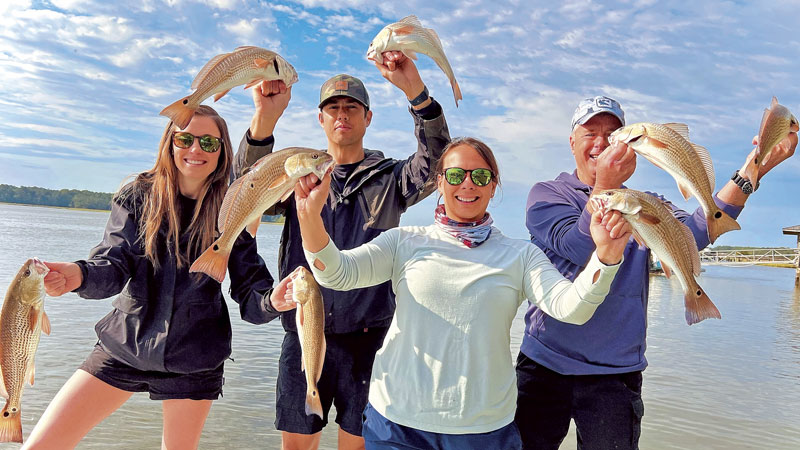
These two drum species are lowcountry favorites
Two of the most consistent-biting fish this month along South Carolina’s lowcountry include
redfish and black drum. And anglers can catch them with live bait, cut bait, or artificial lures.
Capt. Dylan Rohlfs of Red Fin Charters (843-277-5255) in Charleston, SC said the key to catching red drum, commonly called redfish, is staying on the move and hitting docks, grass lines and oyster shell banks.
“Fishing these areas when the tide is moving in either direction is a good bet for redfish. Using live shrimp under a popping cork is one good method,” he said.
Rohlfs anchors down within casting range, then casts beside the dock pilings, or under the dock if it has enough room. The redfish, he said, patrol the docks, keeping safe from porpoises while also ambushing prey.
Pop it up
“Everything eats shrimp, and a live one dangling under a popping cork is too enticing for a redfish to pass up,” he said.
The typical popping cork method involves making a cast, letting the bait settle, then giving a quick pop of your wrist. Thanks to the cork’s construction, this creates a sharp popping noise on the water’s surface, causing fish to look that way. That’s when they see the shrimp.
After that first pop of the cork, anglers can reel in the slack line, then repeat. It sometimes takes a few casts before getting a bite. Other times, the bite is more immediate.
“It is one of the most effective ways of catching redfish this time of year,” said Rohlfs. “Especially on days when the bite is kind of slow, using a popping cork can really save the trip,” he said.
And it’s not just effective around docks.
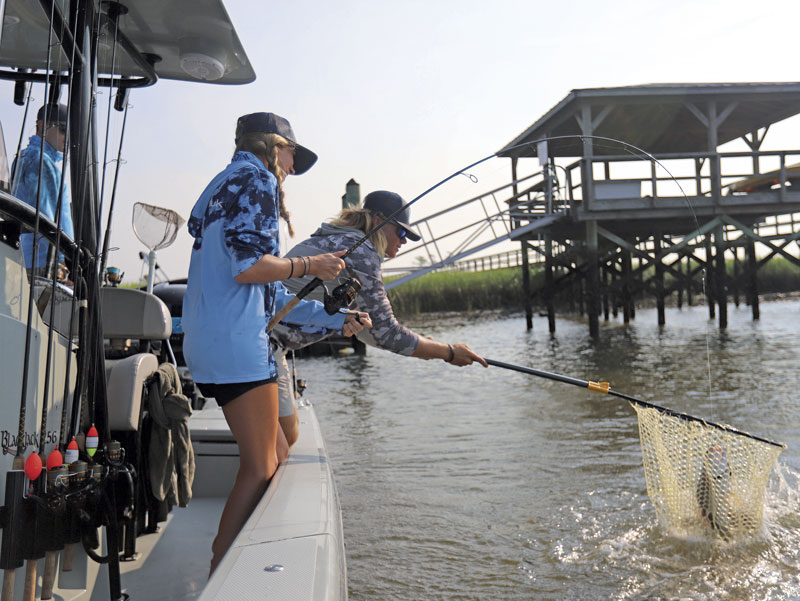
“If you find flooded grass near oysters, that’s a great place for a popping cork. Redfish are very active in these areas, pushing through the grass looking for fiddler crabs, and also hovering over those oysters, looking for small crabs and baitfish congregating there,” he said.
On some days, anglers don’t even need to pop the cork, but can simply let it sit on the surface while the live shrimp provides all the action underneath.
“When these fish are especially active, they’ll find the shrimp, even without the popping noise of the cork. But when that’s not working, anglers need to start popping the cork methodically. If that doesn’t draw strikes, you can get more aggressive. It’s really different from one day to the next, and even on the same day whenever conditions or locations change,” he said.
As effective as popping corks are, it’s not the only way to catch redfish.
“They are pretty hearty eaters, and most days, they aren’t particularly picky about what they eat,” said Rohlfs.
Carolina rigs are made with egg sinkers anywhere from a foot to 2 feet above a 3/0 circle hook. Pieces of shrimp, crab or cut baitfish placed on the hook will get plenty of bites from hungry redfish. And even live bait works just fine.
“You can fish with Carolina rigs in the same general areas as popping corks,” he said. “You have to be a little more careful about getting hung up in oysters. But it’s another great way to catch redfish,” he said.
When fishing this way, anglers don’t need to impart any action. They can either place the rod in a rod holder, or keep it in their hands to detect light bites. The circle hook does a great job of allowing the fish to hook itself, usually piercing the corner of its mouth for easy removal.
Anglers looking for a more active role can use any number of artificial lures. Soft plastic shrimp, swimbaits, and artificial crabs are good choices. Topwater lures can be effective too, especially during low-light conditions. And spoons are one of the most overlooked lures for redfish.
Black holes
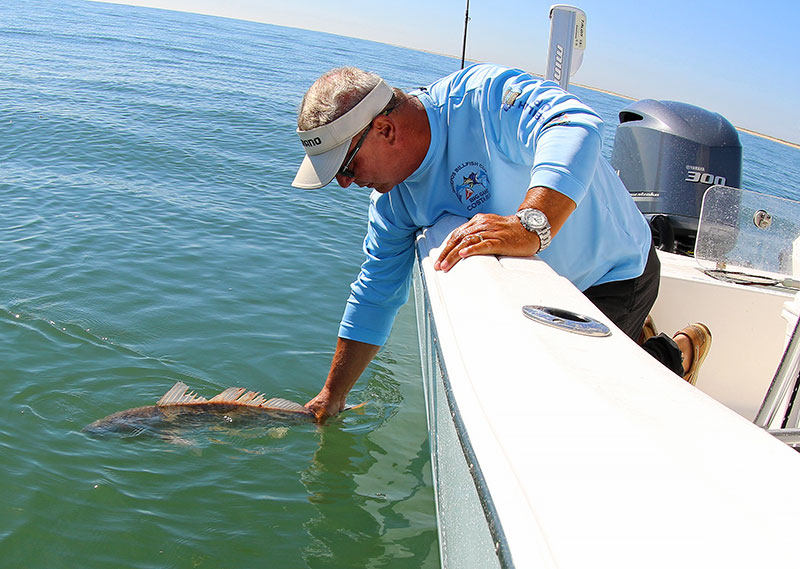
Catching black drum (or at least targeting them) is a bit different than fishing for their reddish cousins. They will sometimes bite in the same areas as redfish. Most black drum catches are somewhat accidental, by anglers fishing for other species. But anglers can specifically target them by making two changes: fishing tighter to structure, and fishing in deeper holes.
Those same docks that hold redfish also attract black drum. But instead of patroling all around the docks like redfish, black drum will spend most of their efforts close to some type of structure, like the dock’s pilings or sea walls.
“If you want to truly target black drum, you’ve got to put your bait as close to the structure as you can get,” said another pro angler from Red Fin Charters, Capt. Austin Daniel.
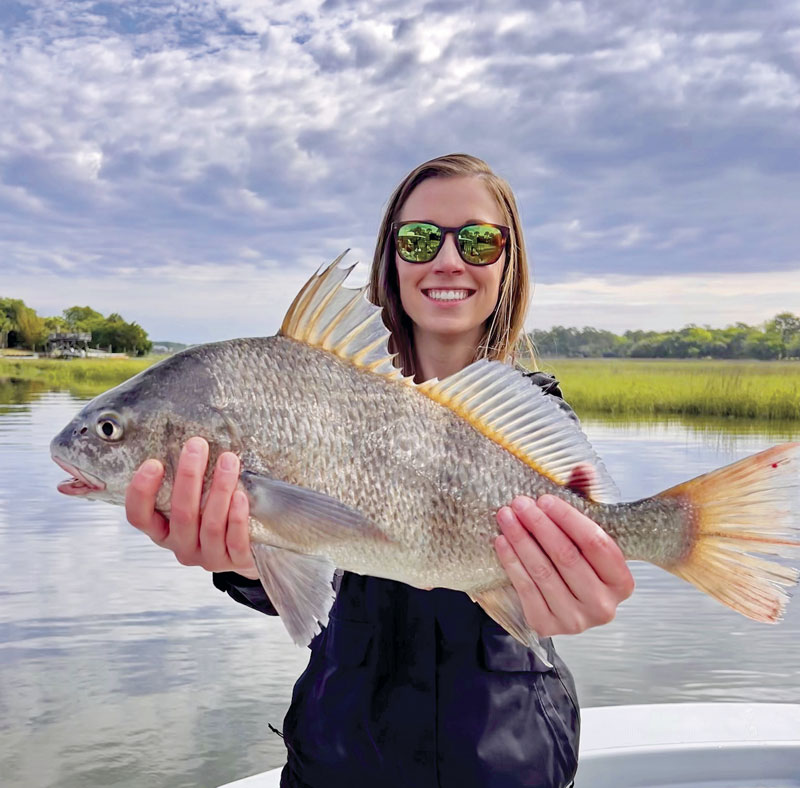
Getting out of the smaller creeks and looking for deeper holes in Charleston Harbor, anglers can focus even more on catching black drum, including some trophy-sized fish.
The term “deeper holes” is relative, so if your depthfinder is showing the water is 20 feet deep, then a hole that is 27 feet deep, then goes back to 20, try some cut bait in that 27-foot hole. But don’t shy away from a hole that is only 12-feet deep, if the water all around it is something like 8 feet deep.
When fishing deep holes like this, it’s best to have a little bit more patience than when fishing the docks.
Patience is always a big part of fishing, but Rohlfs said there is a difference between being patient and wasting time.
“When fishing inshore docks, if you’re not getting bites pretty quickly, move on to another dock. Some days, you can catch fish at just about every dock you try. Other times, the fish seem to be stacked up on just a few docks, for whatever reason,” said Rohlfs.
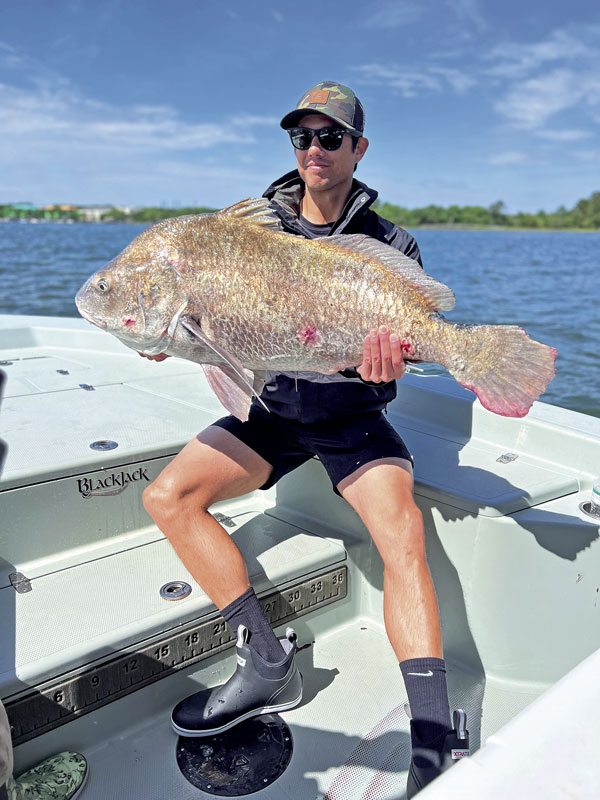
But he and Daniel agree, that when probing the deep holes for black drum, a little more patience is warranted. Sometimes, they said, when you think you’ve waited long enough, forcing yourself to stay an extra 5 minutes can result in catching the biggest fish of the day.
The beat of a different drum
Redfish and black drum are both members of the drum family, thanks to their abilities to make a croaking, or drumming, noise. And even though they hang out in similar places and eat the same things, these cousins look and act quite differently.
Anglers hoping to catch redfish will have better luck with a more active approach, using popping corks, using fishing lures with action, and using live bait that moves on its own. Redfish are not opposed to chasing down a meal, and it often seems that’s the way they prefer.
Black drum, however, are more apt to sit tight to structure and eat whatever happens to swim into range. They won’t turn down a live shrimp or baitfish that appears close enough to gulp it down. But they aren’t interested in chasing after it once it swims past. Anglers hoping to get a “big ugly” on the line can use that to their advantage, either by using cut chunks of bait and letting it settle tight to structure, or by using live bait on heavy jigheads, which will make a nice presentation while preventing the bait from moving too quickly or too far.

Be the first to comment