


Inshore anglers have differing opinions about which tide is best
When it comes to saltwater fishing, anglers have a variety of opinions. One of those involves which tide is best for fishing. Is it the incoming tide or the outgoing tide?
Some anglers swear by the incoming tide. Others will tell you only the outgoing tide is good for fishing. Most agree that as long as the tide is moving in one direction or the other, the fishing is better than it is at dead low tide or at the peak of the high tide.
But for many anglers, their allotted fishing time is determined more by how much free time they have than by what mother nature is doing. So they don’t have the luxury of fishing just one tide or the other. And for anglers like Capt. Noah Lynk of Noah’s Ark Charters, they’ve got to fish whenever their schedule (or their clients’ schedule) allows.
When it comes to making a living on the water, Lynk must be able to find fish no matter what the tide is. And while most anglers don’t face that kind of scheduling crunch, they can all benefit from what Lynk has learned after running a guide service for decades.
“Tide absolutely matters,” said Lynk. “It’s actually a very crucial part of fishing, especially inshore fishing.”
But, that doesn’t mean he prefers one tide cycle more than the other. He catches fish on both tides, and said other anglers can too.
“The most important thing about the tide is knowing where enough water is present on either tide, and knowing how long you can stay there without getting your boat stranded. But you can catch fish on either tide,” he said.
As for his personal preference, it just depends.
“I have some places that I cannot fish unless it’s high tide because it is either too shallow at low tide for my boat, or it has no water at all at low tide,” he said. “But just because the water drops all the way out at low tide, that doesn’t mean I don’t want to fish those areas. Some of them offer excellent fishing when the water is there,” he said.
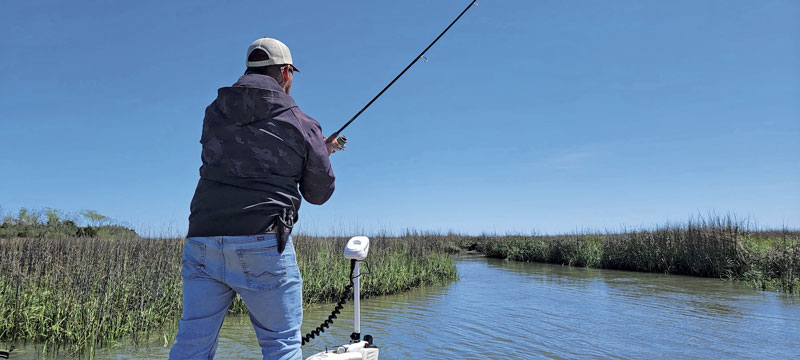
Don’t leave too soon
Lynk (252-342-6911) said one mistake many anglers make is leaving an area too soon. They may be worried about becoming stranded, but they’re leaving behind some of the best fishing of the day.
“Nobody wants to get stranded by the tide. But you’ll miss some of the best fishing if you leave an area too early,” he said. “Those small creeks that dry up at low tide will offer great fishing as the tide is falling.”
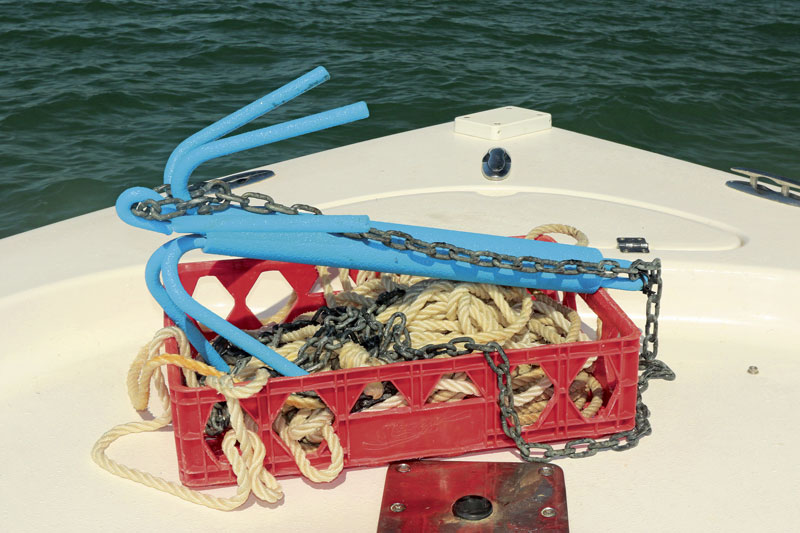
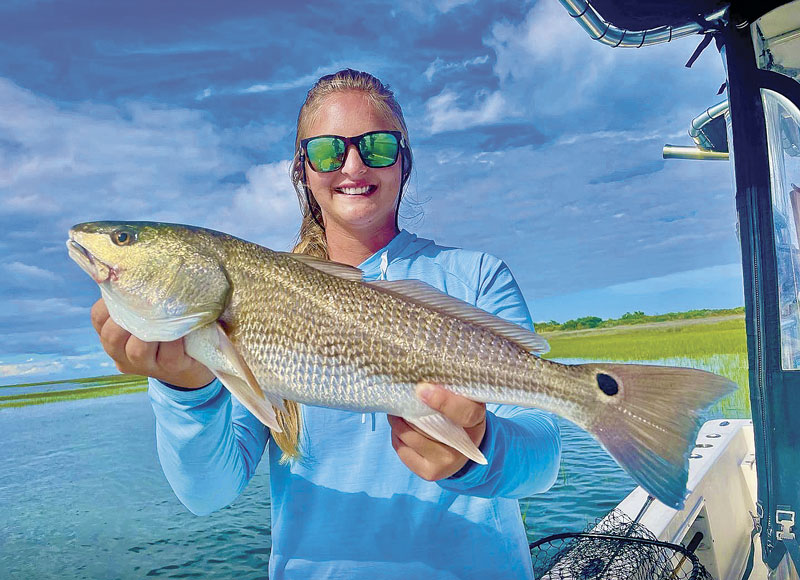
In these situations, Lynk likes to anchor up within casting distance of the mouth of such creeks. The fish that have been in these small pockets of water feel the urgency to feed before the tide drops all the way out. As they make their way out, they won’t pass up an easy meal. Food is easier to find right then than it will be for the next several hours. The baitfish must leave as well, so for those few moments, fish like red drum, speckled trout, flounder and black drum take advantage of what amounts to a smorgasbord.
“As the tide comes into these creeks, baitfish flood into them, so the gamefish follow,” he said. “They can feed on not just baitfish, but also fiddler crabs and other life that’s much easier to find in small creeks than it is in open water.
“These fish will stay in those creeks throughout high tide, resting out of the current while eating as much as they can. Then as the tide begins to leave, they want to make sure they’ve got a belly full to make it to the next low tide, which is several hours away, when the food will be easy to find again.”
Once the tide drops low enough that Lynk needs to pull up anchor and leave, he’ll search for the next creek mouth nearer open water. He’ll fish that one the same way.
“A lot of anglers will leave a spot like this as the tide is dropping, then head to open water or to the boat landing to call it a day. But they can catch a lot more fish if they post up at similar creeks that are closer to open water as the tide goes out,” he said.
Move with the tide
Lynk does the same thing on the incoming tide, and said this technique is even more effective then.
“On the incoming tide, the fish are really ready to eat. They’ve been waiting for it, knowing they can get back to those small creeks where they have easier access to baitfish and fiddler crabs. So while some fish will leave with a full belly on the outgoing tide, most fish are hungry on the incoming tide,” he said.
And many anglers, said Lynk, figure out a good spot to fish as the incoming tide brings gamefish and baitfish in. And they’ll have some success at that spot, then call it quits, or try something totally different, thinking the incoming bite is done.
“They’ve done good by finding that spot. But what more anglers need to understand is that whatever that spot has that makes it good on the incoming tide, a lot of similar spots are also around. And the incoming tide hits those other spots 15 minutes, 30 minutes, 45 minutes after their preferred honey hole,” he said.
Finding those other spots is just a matter of paying attention to your surroundings. As you set up on your favorite location, look to areas that don’t have enough water for your boat yet. And as the fish come in and your bite slows down, move to those other areas as the water level makes them available.
“And on some days, even the best honey hole simply doesn’t produce, for whatever reason. So as long as you know of other areas to try as the incoming tide moves in, you’ll have plenty of chances to save the day,” said Lynk.
On a typical day, Lynk said anglers using this method should be able to catch their share of fish in one spot, then do the same thing in another, and another, until the peak of the high tide.
“Then you can do the same as the tide drops out. Set up at the mouth of one creek, and catch fish as the tide drops. Then move to another creek mouth that keeps water just a little bit longer than the first. And on and on,” he said “Play the tides right and you can stay in the hot spot all day.”
Kayak anglers can stay shallow all day
Kayak anglers have a big advantage over those in power boats. They can reach areas the big boats can’t, and can stay in those areas longer without fear of being left high and dry.
And even if they do stay longer than they should in a creek, it’s usually not too tough to pull their kayaks over the land to get back into the water. That is, as long as they aren’t left in pluff mud, which can certainly happen.
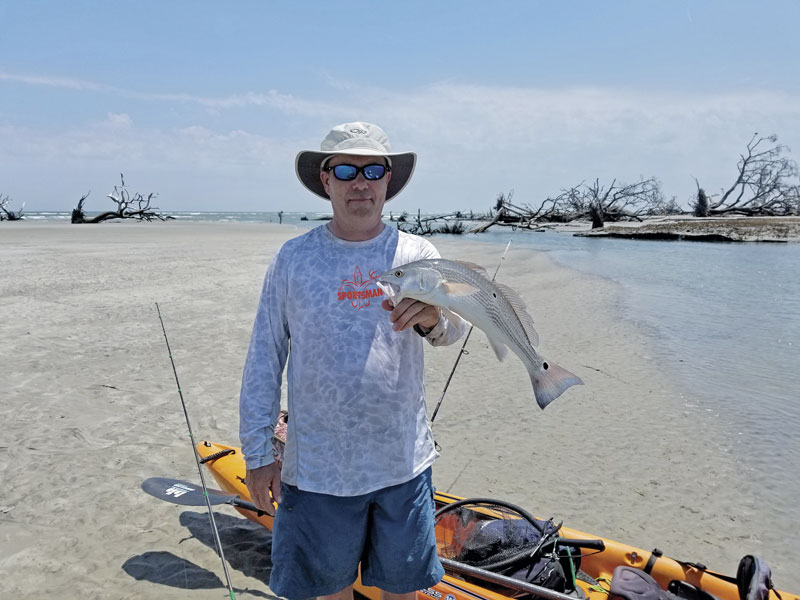
Staying in creek mouths to catch fish as they enter or leave the creek is less stressful for kayak anglers, since it’s fairly easy to push off of oyster bars or dry ground if they stay a bit too long. And this gives them extended chances to catch more fish before moving on to the next spot.
Some kayak anglers even prefer to stay in small creeks that are cut off from the main waterway at low tide, as long as the time of day leaves enough daylight for the tide to come back in, giving them access to leave the creek before dark.
While this strategy doesn’t give them the advantages of hitting multiple entry and exit points, it does give them the opportunity, or “force them,” to learn how to catch fish at dead low tide.
Some use that time to take a break, eat lunch, then get their gear ready for the incoming tide. Others use it to try new fishing techniques and tackle. And still others use it to catch bait. And then once the tide begins returning, they’re set up perfectly for catching hungry gamefish.
Be the first to comment