

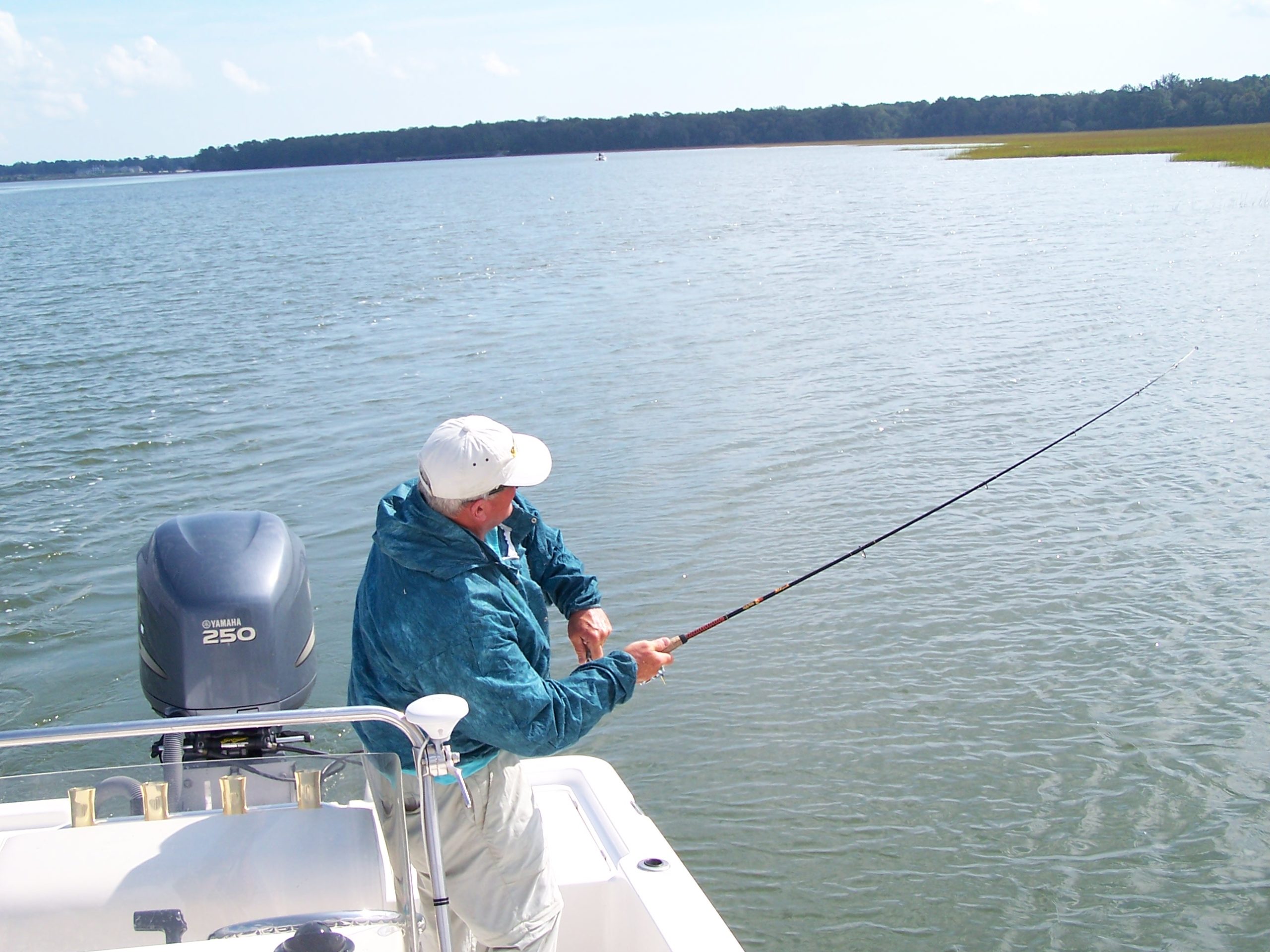
Guide Dan Utley of Hilton Head said trout often stay on the move during early spring, following newly arrived baitfish and adjusting to cold fronts. One of his favorite tricks for locating trout that are “here today, gone tomorrow” is by trolling.
“Trolling for trout is a great search technique,” said Utley. “Then, once you find them, you can anchor down and cast to a hot area.”
Utley said trolling in creeks and rivers is different than areas that don’t have large tidal fluctuations. Water depth will change, so it’s advisable to always know how much water is under the boat.
“Watching a depth recorder is not critical while trolling, so long as the troller is aware of the water depth in his trolling run,” he said. “Anglers wishing to pinpoint trout to return and cast for feeding fish would do well to pay close attention to what depth or structure you’re on when you get strikes. Most often, this will be on some drop off of at least a foot or 2.”
A medium-action baitcasting or spinning rod with a lot of give is important for trolling. Specks have tender mouths, and the force of trolling can pull the hook free, so a rod that provides some “give” will save fish.
Also important to recognize is that trout are ambush feeders and often strike the bait using their front teeth to injure the bait, and then return to finish the job.
“On the boat, this will look like a quick bend in the rod that straightens back up,” Utley said. “Setting the hook will only pull the jig out of the strike zone. Wait until the rod is bent over and let the fish hook itself.”



Be the first to comment