

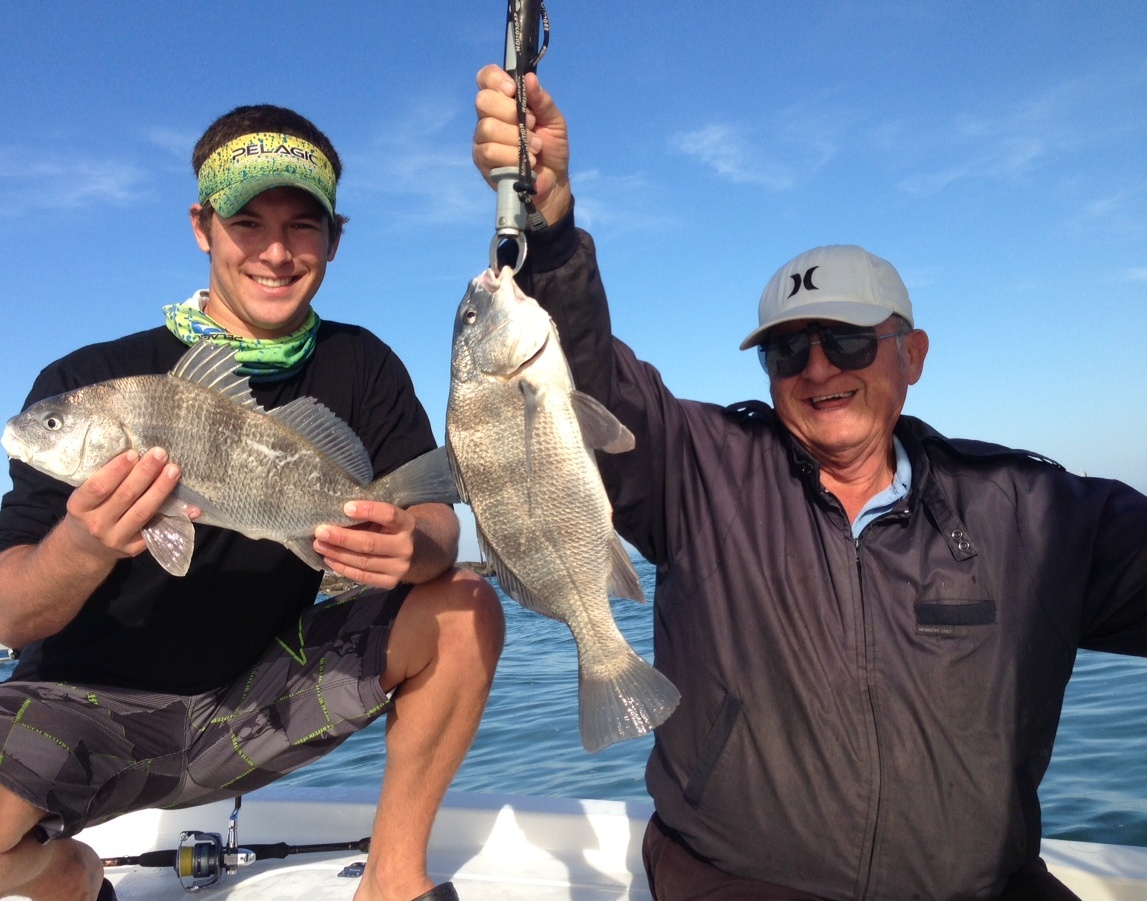
As large schools of shrimp invade Murrells Inlet, many species of fish will show up to fatten up before winter arrives. From lesser desired bluefish and ladyfish to the favored speckled trout, redfish, and black drum, shrimp are the primary food source over the fall. When anglers find one of these other species huddled up in a confined place, the speckled trout are usually very close by.
Trout will hold at various depths, from just under the surface to the bottom, and when they are suspended over deep water, they can be tough to catch. Luckily, these other species huddled around the shrimp will tip off anglers that trout are there holding at a different depth.
J Baisch of Fishfull Thinking Guide Service often fishes very close to the bottom; when he cannot keep the black drum off his hooks hook, he knows speckled trout lurking just a few feet shallower.
“Anywhere you catch black drum), there will be trout right above them,” said Baisch. “Black drum are good indicator that you are in the right area.”
Baisch keeps a close eye out for ladyfish crashing at the surface on sand flats at high tide because trout will be feeding right beneath them, just out of sight.
Signs of feeding activity in the fall are always a good indicator to find target species, even though it may not be visible off the boat. With the shelves stocked full of shrimp in the fall in the creeks or at the jetties, always look for a wide assortment of preferred and non-preferred species filling their bellies at one depth or another.

Be the first to comment