

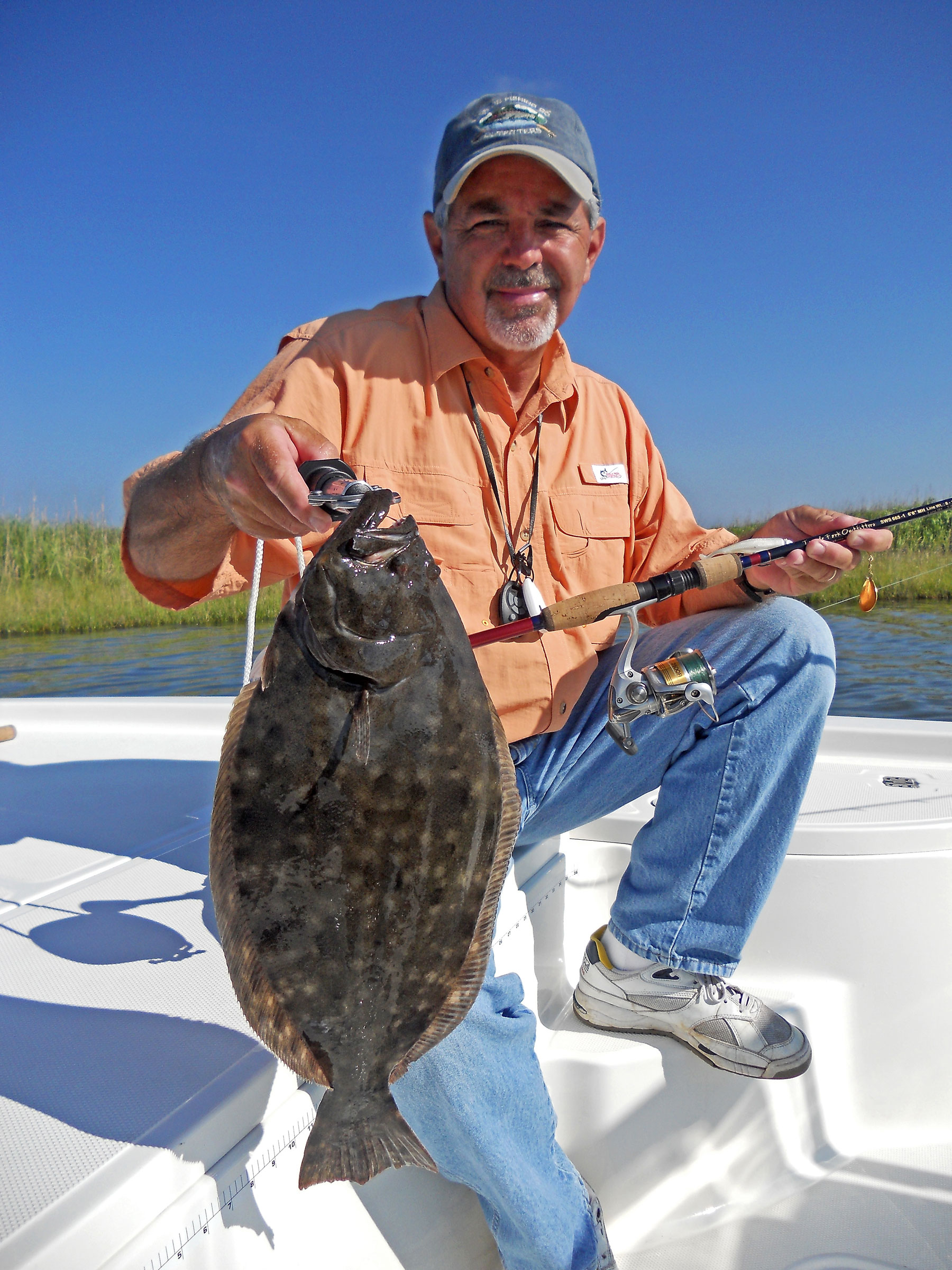
Most North Carolina sportsmen, especially those who live in the eastern part of the state, know Joe Albea’s name. Anyone who has watched the University of North Carolina’s public television stations for the past 19 years has probably heard of Albea. He’s creator/director/co-host of WUNC-TV’s popular Carolina Outdoor Journal and been behind the camera since 2005 filming Exploring North Carolina with host Tom Earnhardt.
The two excellent shows are almost enough to have earned him North Carolina Sportsman’s “Sportsman of the Year” award for 2011, but they only reveal a small part of what Albea has meant to the state’s wildlife and citizens.Born in Cherry Point, Albea moved to Greenville with his family when he was five and grew up hunting in Pitt County and fishing Pamlico Sound. After leaving East Carolina University one semester shy of a degree, Albea worked twice for a total eight years as an outdoor columnist for the Greenville Daily Reflector. Later he wrote for a Kinston publication, Carolina Outdoor News, during the mid-to-late 1970s.
“That’s when Graham Flanagan, owner of Sea Ox (boat company), introduced me to Franc White,” said Albea, who became White’s cameraman for Southern Sportsman, North Carolina’s first first local hunting and fishing television show.
“I started working with Franc in 1977 and 1978 and filmed 50 of his shows for five or six years,” Albea said. “He gave me the opportunity to shoot moving pictures.”
Albea wound up shooting and producing fishing videos, eventually settling down in the Greenville suburb of Winterville in 1989 to begin Carolina Outdoor Journal and begin co-hosting in1992 an outdoors-oriented radio show, Carolina Today.
Carolina Outdoor Journal and Exploring North Carolina reveal Albea’s eclectic interests. Viewers may learn about Cape Lookout fishing for Spanish mackerel, rainbow trout in the mountains, North Carolina’s 180 butterfly species or, yes, even kudzu.
However, Albea, 57, has another side that is, well, fierce. Although small in stature at 5-foot-6, he’s been and remains a giant when it comes to protecting the state’s natural resources.
Albea’s efforts were instrumental in winning a battle that lasted more than four years to stop the U.S. Navy from establishing an Outlying Landing Field (OLF) in northeastern North Carolina. He was also a key player in marshalling forces to halt a proposed Wisconsin Tissue paper plant on the Roanoke River and earlier an ethanol plant near Jamesville that would have endangered the east coast’s best striped bass spawning river. He’s also fought against the Navy’s attempt to expand a bombing range in Pamlico Sound and currently is involved in opposing a large wind-energy farm that is planned for an area close to the Pungo National Wildlife Refuge.
Although the OLF legal fight lasted 50 months, Albea was involved three years earlier, in 2000, when Beaufort and Washington county farmers and waterfowl fans went numb after they learned of the Navy’s plans. But Albea knew about the OLF proposal before anyone.
“A refuge employee sent me a package with all five proposed (OLF) sites,” he said. “I automatically wrote off the Washington, Beaufort and Hyde county sites. I said there’s no way (the Navy) can fly jets into these places; there are too many birds.
“It quickly became apparent after four or five months (the Navy) already had decided on Washington County because they had political support — Sen. John Warner of Virginia,” he said. “They even had the support of (Mike) Easley (then North Carolina’s governor).”
Albea said the political cover was the reason it took seven years to halt the Navy’s plan. Even Easley reversed course after OLF opponents, including Albea, flooded politicians in Raleigh and Washington, D.C., with emails, phone calls and personal visits, including a protest by farmers who drove their tractors around the state legislative building.
Albea is currently lending his support to the push to get the legislature to review North Carolina’s marine resources management and end use of commercial fishing gear that destroys finfish and shellfish habitats in Pamlico and other sounds. He also supports gamefish status for spotted seatrout, red drum and striped bass.
“I hope we can get something positive done,” he said.
When asked if a victory in the saltwater resources battle would signal an end to his involvement, Albea smiled.
“There’s always another issue,” he said.
That’s why he is North Carolina Sportsman’s Sportsman of the Year.
Be the first to comment