

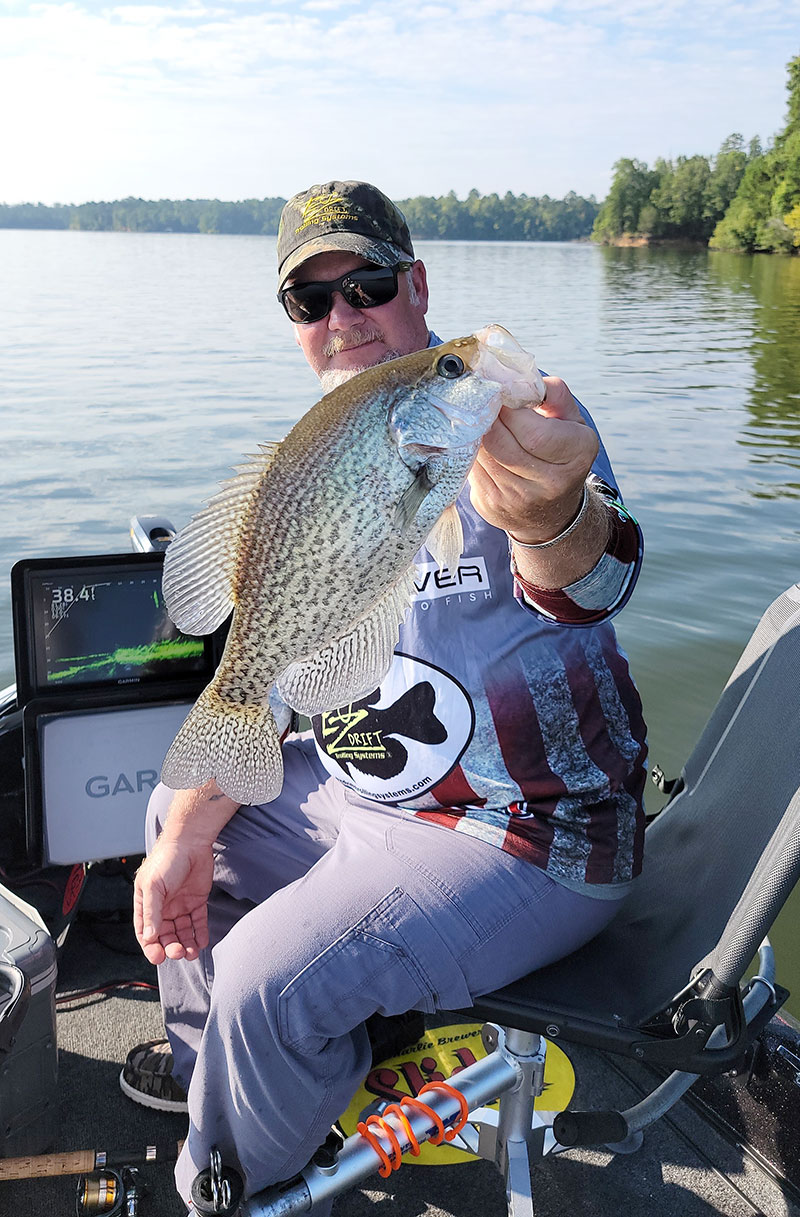
Hit these Carolina lakes for October slabs
Crappie fishing in the Carolinas offers anglers a chance to fill coolers with tasty panfish while enjoying some of the Southeast’s most productive reservoirs. In both states, lakes with strong forage bases and abundant structure provide ideal conditions for crappie, and knowing which lures and techniques to use in each setting makes all the difference.
High Rock Lake
In North Carolina, High Rock Lake is a top destination. Known for its stained water and plentiful brush, crappie here often hold tight to cover. Anglers do well by spider-rigging with minnows and jigs tipped with curly-tail grubs in chartreuse and black.
Slow-trolling along creek channels and submerged brush piles is especially productive during the fall, when fish begin schooling up in preparation for cooler weather. For anglers preferring a more active style, casting small tube jigs around docks produces steady action.
Jordan Lake
Another North Carolina favorite is Jordan Lake, where crappie thrive in deeper water during much of the year. In October, anglers often find success vertical jigging with 1/16-ounce hair jigs over submerged timber and ledges. Minnows fished on slip floats around bridge pilings are also reliable, as schools often suspend there in big numbers.
Using electronics to locate suspended crappie in the main lake channels is a proven method, and once located, a slow and steady presentation usually brings quick bites.
Lake Wateree
Across the border in South Carolina, Lake Wateree stands out as a crappie hotspot. Here, trolling with double-minnow rigs or jig-and-minnow combinations is the go-to tactic.
Fall fish often relate to points and creek mouths, and anglers covering water with multiple rods have the best results. Bright-colored jigs, particularly pink and chartreuse, are favorites when the water carries a bit of stain.
Lake Greenwood
Lake Greenwood offers anglers a different challenge. Its clearer waters often call for a finesse approach. Small, natural-colored jigs and minnows fished around brush piles in 12 to 18 feet of water consistently produce. During the fall, crappie also push into shallower creeks, where casting tiny shad-imitating crankbaits can trigger aggressive strikes.
Patience and a slower presentation are key in Greenwood’s clearer conditions, as crappie can be more finicky than in other lakes.
Whether spider-rigging on High Rock, vertical jigging at Jordan, trolling at Wateree, or finessing fish on Greenwood, crappie anglers in the Carolinas have plenty of opportunities to enjoy fast action and fill their livewells.
Be the first to comment